Columbia Presbyterian Medical Center
The Shrinking ManColumbia Presbyterian Medical Center is the New York institution designated for the specialist investigation of Scott Carey’s progressive shrinking. It becomes both the proposed source of medical answers and a practical burden for Scott and Louise Carey: examinations take time, their outcome is uncertain, and the cost threatens a family already trying to build financial security.
Referral and proposed examinations
After Scott is shown X-rays from four days apart that confirm his shrinking, Dr. Branson recommends that he go to Columbia Presbyterian Medical Center. Louise insists that he follow the recommendation, even as Scott raises the expense. The referral thus arrives with two pressures attached: the need to investigate a startling physical change and the fear that seeking care could deepen the family’s financial insecurity.
The planned workup is described in concrete terms. Doctors intend to check Scott’s endocrine glands, including his thyroid, pituitary, and sex glands, measure his basal metabolism, and perform additional tests. The list gives the proposed investigation a clinical structure, but it offers no immediate explanation or treatment. Scott has asked for candor, and he understands that the doctors’ certainty about the shrinking does not mean they know its cause.
Financial strain and departure
Scott’s stay at the Center is marked by mounting frustration. He recalls the financial burden as one source of anger, compounded by days of examinations that feel fruitless. As the prospect of continued testing collides with the cost and the lack of answers, he tells the doctors that he is leaving before the investigation is complete. His decision makes the Center a point of conflict between the need for medical inquiry and the insecurity that inquiry itself imposes on the family.
The strain is also connected to the plans Scott had made after coming East: work with his brother, a possible partnership, insurance, a bank account, and the gradual construction of a secure home for his family. His illness threatens that whole arrangement. The Center’s costs therefore register not as an isolated inconvenience but against the practical future he had been trying to establish.
Return and continuing investigation
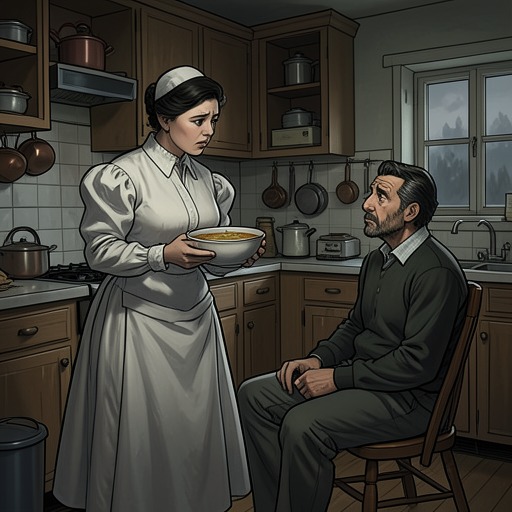
After Scott returns home, Louise urges him to go back and finish the tests. Her resolve gives way to visible distress as she explains that she will work and that Beth Carey can be placed in a nursery. Scott agrees to return. The next morning, a letter from the Center offers to continue the tests free of charge, citing the unusual nature of his disorder and the potential value of investigating it to medical knowledge.
Scott does return, and the narration associates that return with a discovery. The available account does not identify the discovery’s substance, so the Center’s precise diagnostic result cannot be stated here. What is clear is that the investigation continues after the obstacle of cost is addressed, and that the case is treated as potentially significant beyond Scott’s immediate care.
Narrative significance
The Center’s role is defined by the distance between medical attention and a promised cure. Its specialists can document Scott’s condition and undertake systematic tests, but the listed examinations initially yield neither reassurance nor a known explanation. For Scott, the institution is at once a place of possible knowledge and a setting where days of uncertainty intensify his anger and fear about money.
Its offer to waive the cost changes the practical terms of the investigation, not the nature of Scott’s illness. The episode also places a private family crisis within a broader medical frame: the disorder may contribute to medical knowledge even while its consequences for Scott and his family remain immediate and difficult.